
Oct 2023
After having explored the famous Chola and Hoysala temples, decided to explore temples build at other times in history by other southern rulers. Accordingly planned a trip to Haveri and surrounding areas. Included the famous Chitradurga fort in the itinerary.
Accordingly planned a 4-day, 3-night trip to Haveri and Chitradurga. One night at Haveri and two nights at Chitradurga. Stayed at Shiva Residency at Haveri and at Mayura Durga at Chitradurga.
Started early in the morning from Bangalore and drove beyond Haveri to a place called Utsav Rock Garden in Shiggaon district. Took us 5 hours drive along the highway including a breakfast stop on the highway.
Utsav Rock Garden is a “contemporary sculpture museum” with multiple sculptures dedicated to nature and culture and life in north Karnataka rural area. Life size statues of Dr Rajkumar, common village folks, animals and scenes of village bazaar, farming, Dangal, homes of different folks in a village were created. Look was very realistic. Spent 1.5-2 hours here. While one can go to its web page and look at details, sharing some of the pictures I liked below.
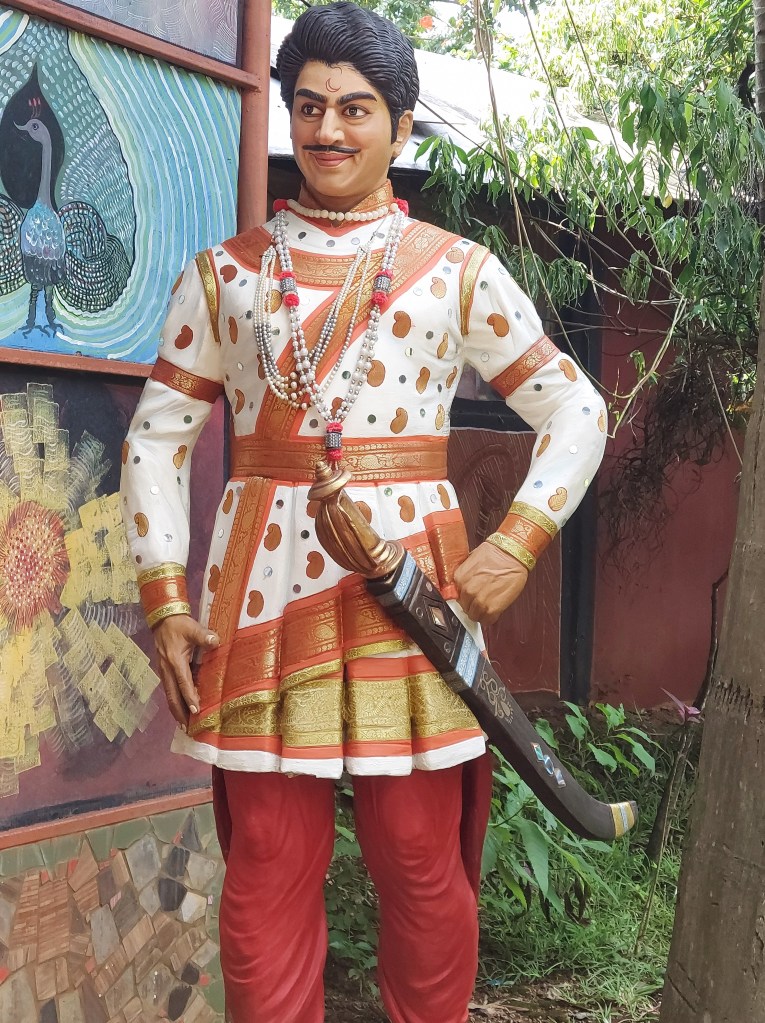
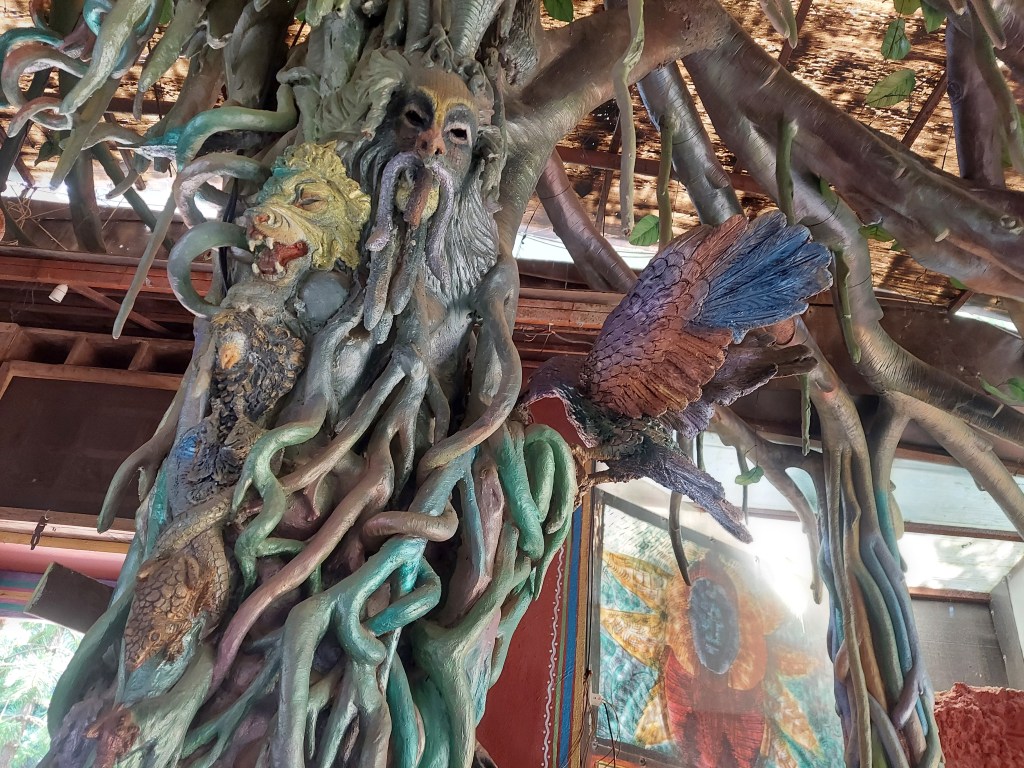


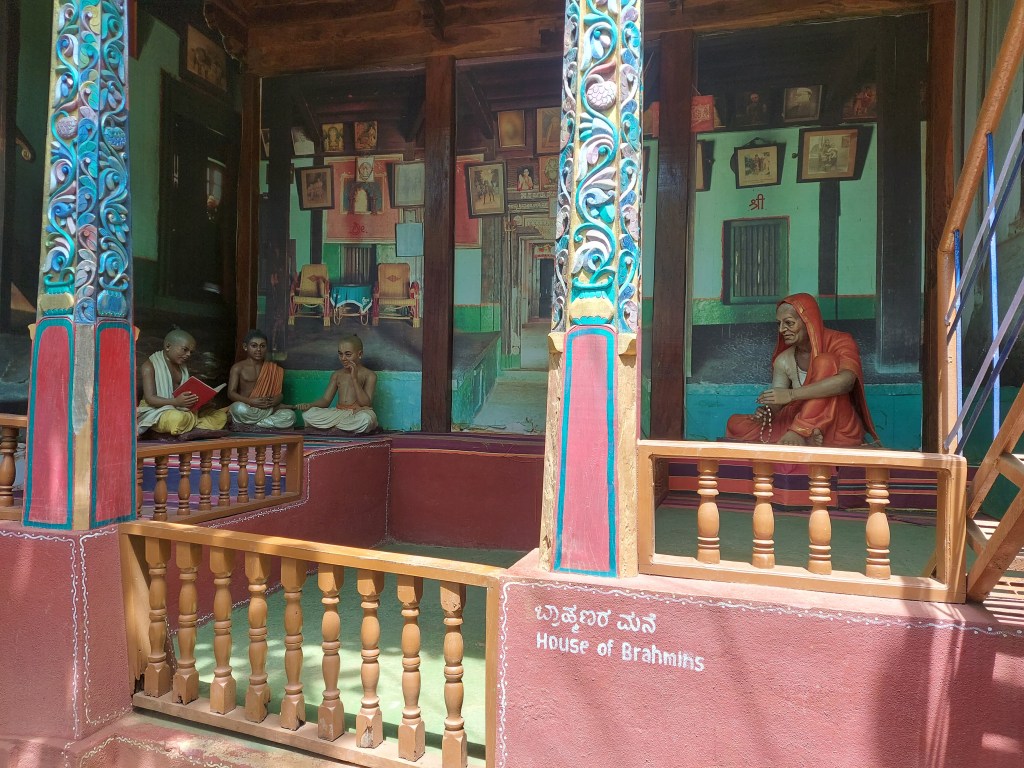


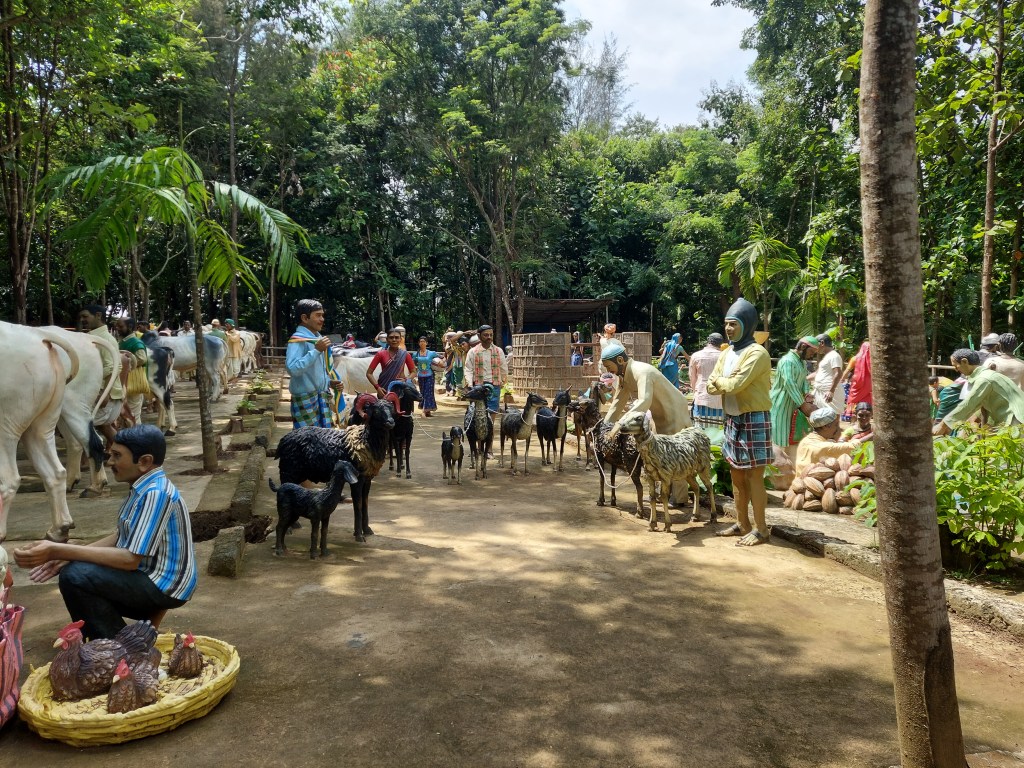
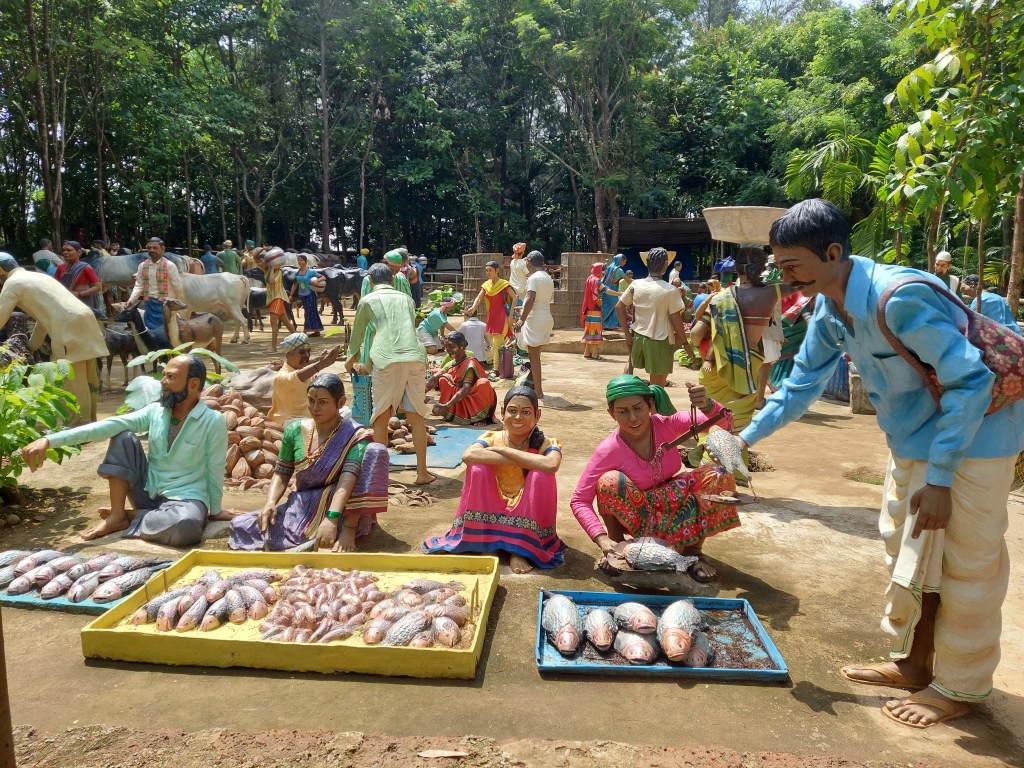


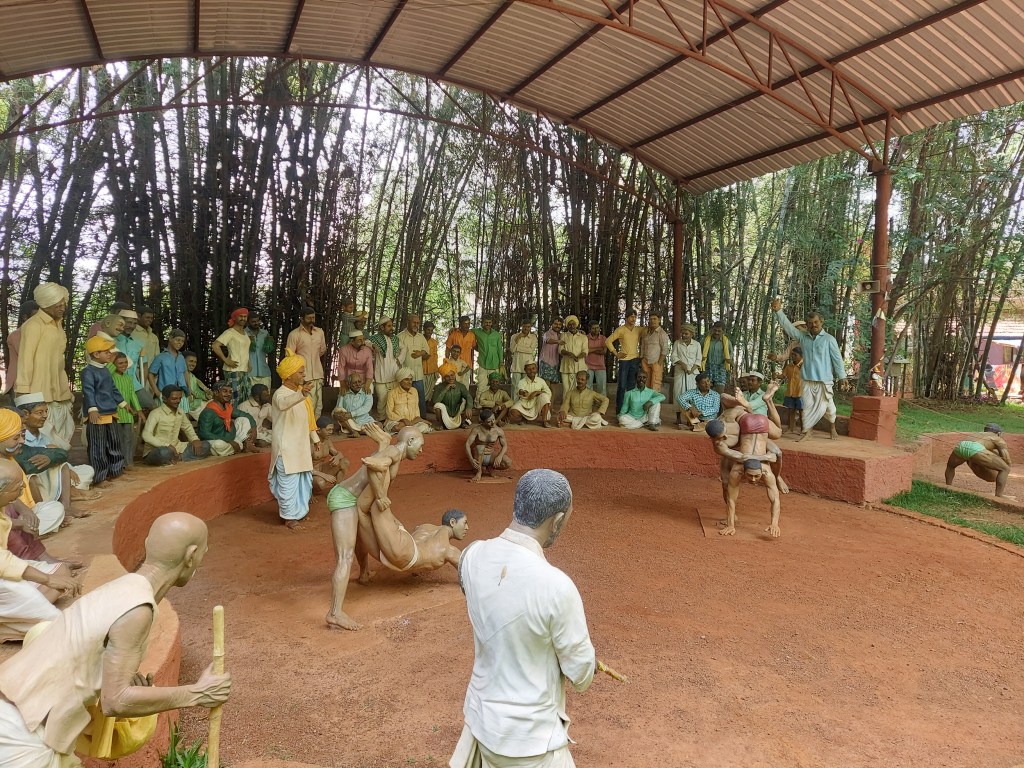

The place also has a dining hall providing typical north Karnataka thali lunch at very reasonable rates. Found a fresh chatni make from local pepper, papad like jowar and bajra rotis and a Holige different from other southern south Indian thali meals/preparations that I have eaten. Nice chapatis too. See thali pic below.

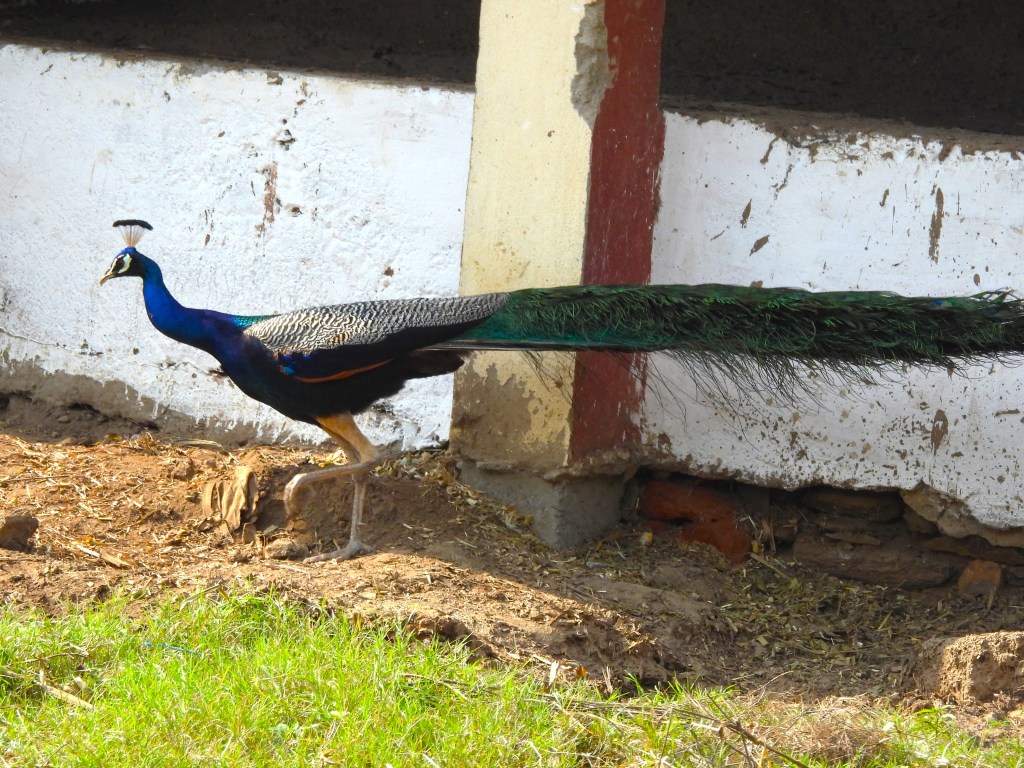
While returning, we visited Sri Nagareshwara temple in Bankapura. The temple was located inside a “Khiller breeding farm” compound. Incidentally, a peacock sanctuary is also located in same compound.
Archaeological Survey of India (ASI) maintains the temple. Well kept. However, the compound was locked and our efforts to find someone who could open it failed. So, it was only external view. Found a few school boys playing in the compound.
Temple itself was located about 10-15 feet below the current surrounding ground level. Built in 12th Century by Kalyani Chalukyas (Western Chalukya). It is also known as Aravattarukmbhada Gudi (temple with sixty-six columns). Temple is dedicated to lord Shiva. Sharing below, a few images of the temple from outside the compound wall.


Image of a peacock from the same compound, which is also a peacock sanctuary.
Drove to the hotel at Haveri and retired for the day.
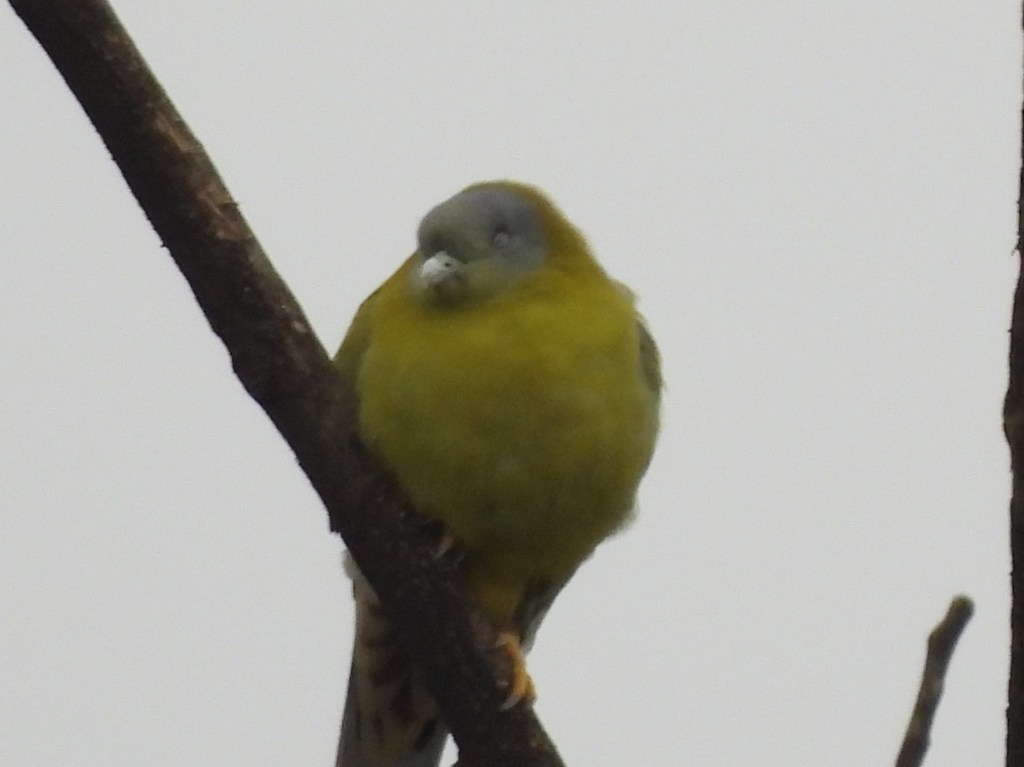
At my morning walk next day, saw a few birds, including a group of yellow footed green pigeons and Dusky martins. Few images below. Look up bird pages for more images.



After breakfast, started for Sri Tarakeshwara temple at Hangal. A 12th Century temple built by western Chalukyas with main deity being lord Shiva. Large circular hall in front of the temple with ceiling carved in the shape of flower. Multiple lathe-cut pillars with different shapes and carvings were supporting the ceiling. Carvings were intricate, but not as extensive as the Hoysala temples. The shikhar looked like built in was built in the hemadpanti style, although this temple is older than the hemadpanti style temples. Below a few images from the temple.
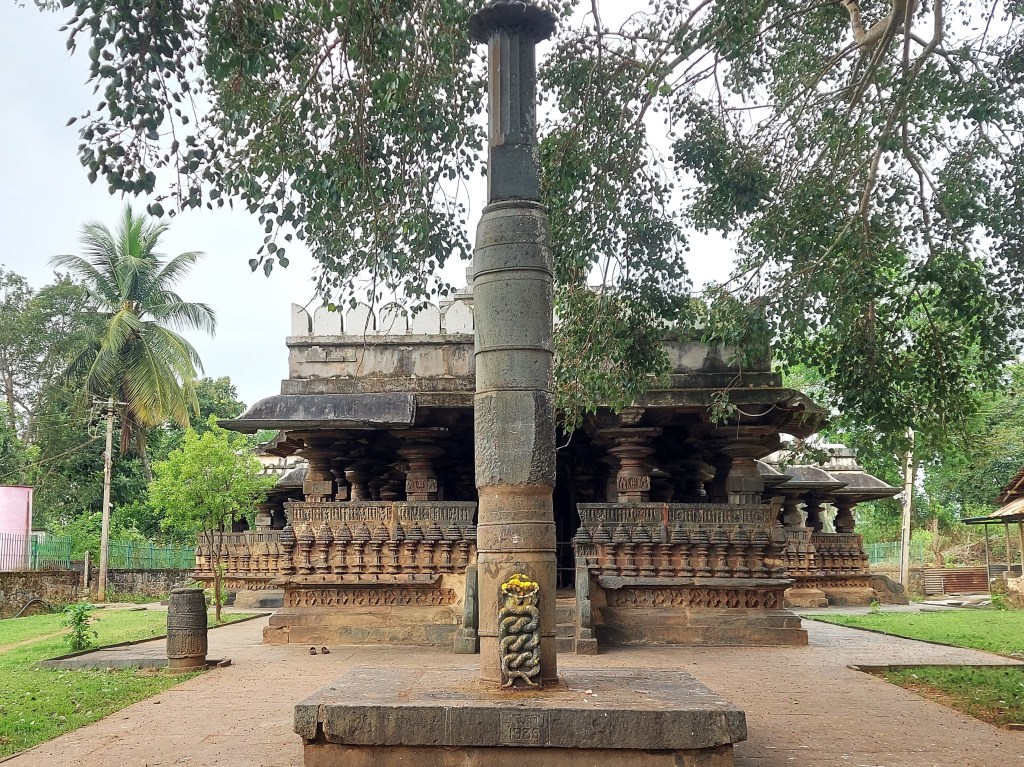
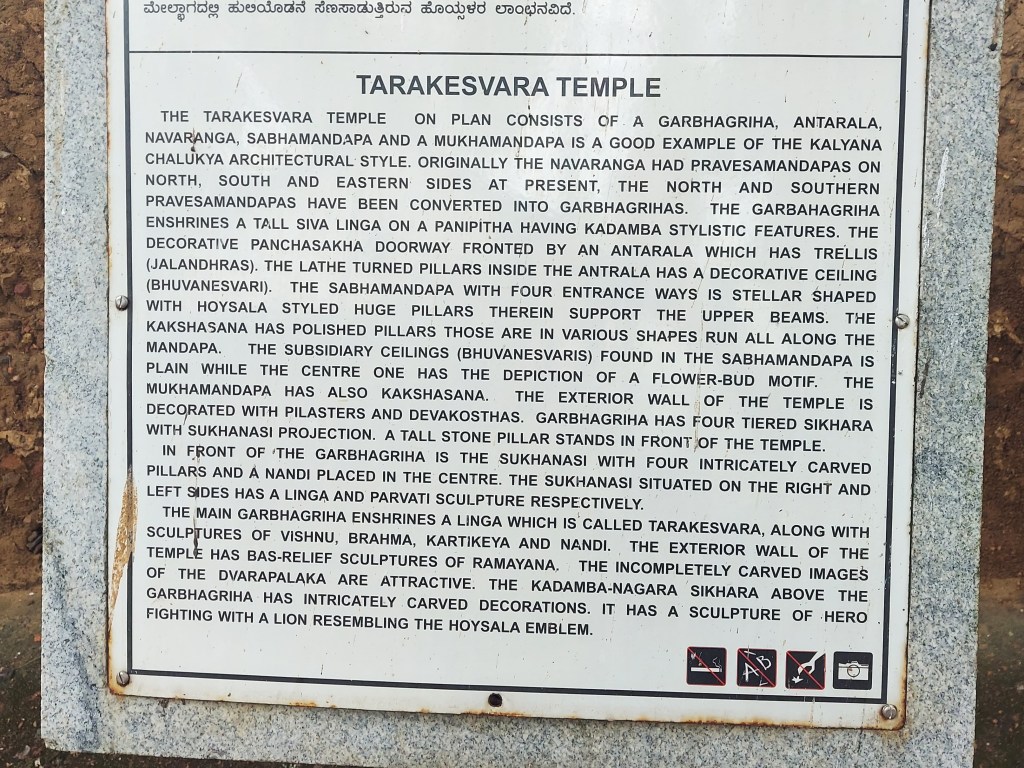
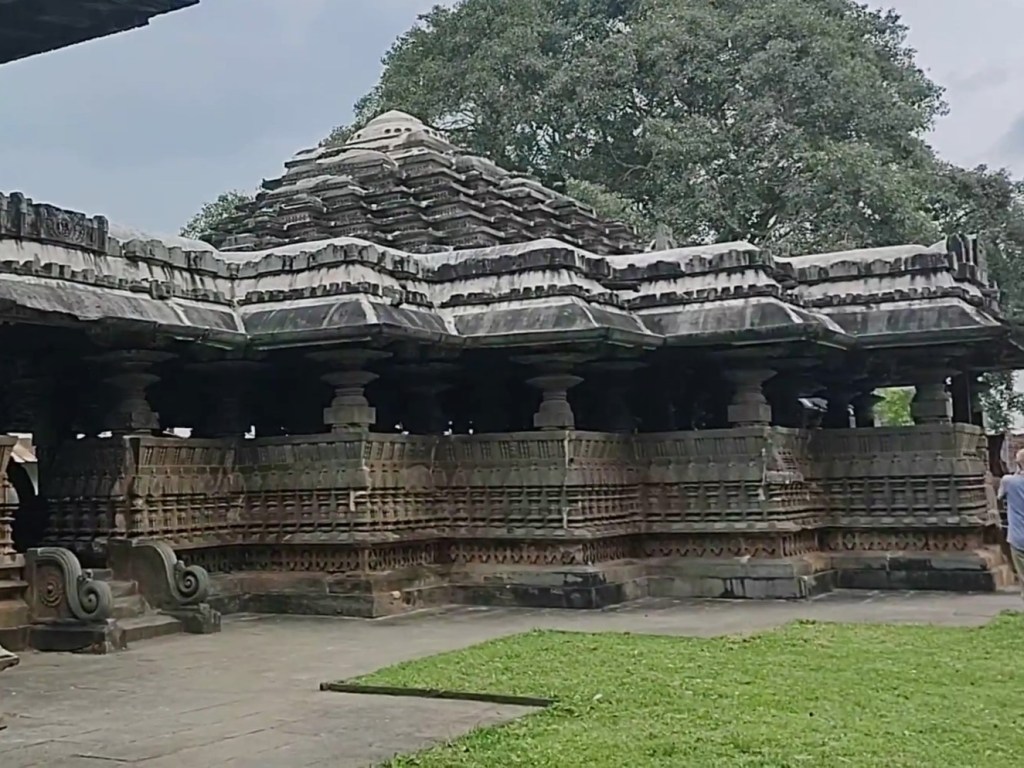


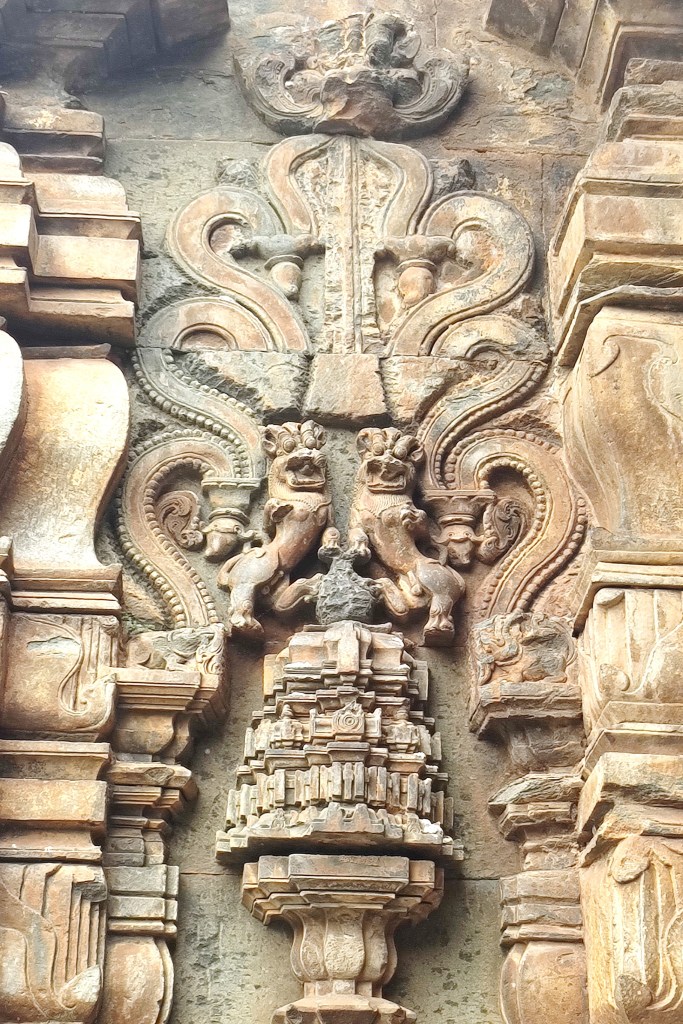
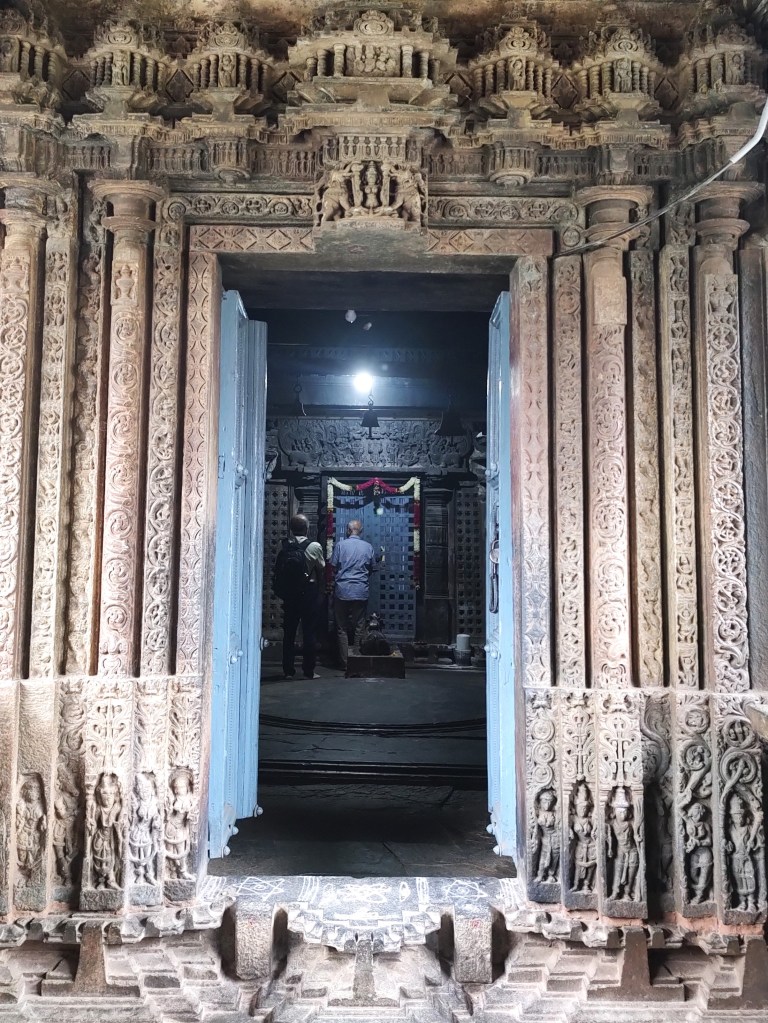


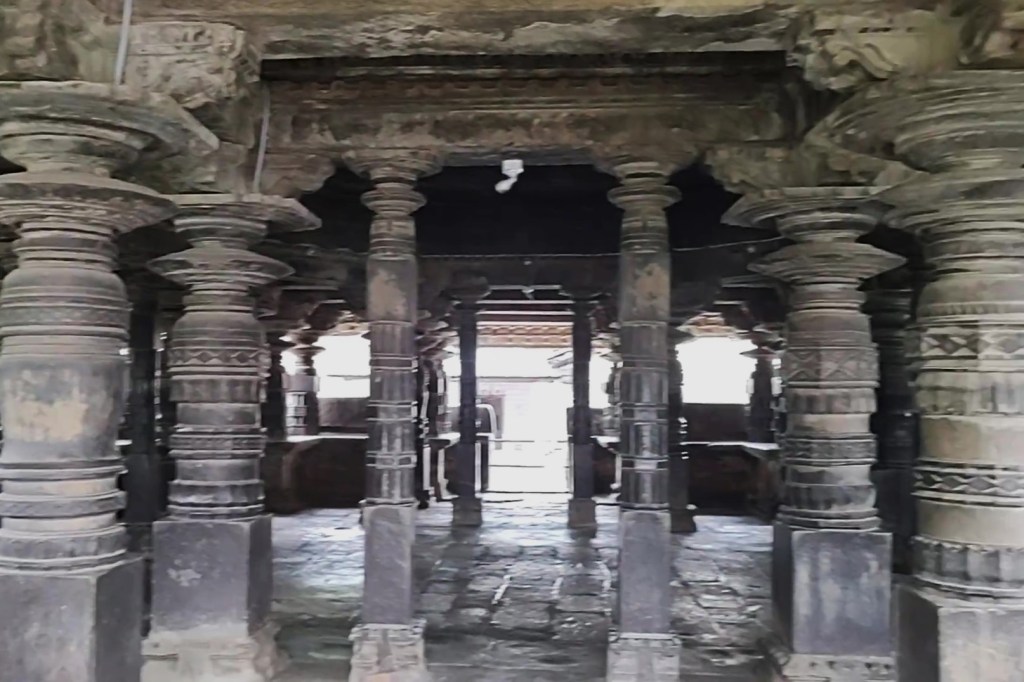
Spotted a Asian spotted Koel and oriental magpie robins in the temple compound. Few images below. For more look up the bird pages.


Next drove to Sri Siddeshwara temple. A temple built by western Chalukyas built in 11th century. This temple too was at a lower level compared to surrounding grounds. A temple dedicated to lord Shiva with a small garbhagriha on the right side decided to Sri Narasimha. Large compound, well maintained by ASI. One of the rare old temples in the middle of the town.


Reliefs were much smaller in size dotting a 10-inch row on the periphery, intricate. One can see the same sized reliefs on the shikhar too. Few images below.

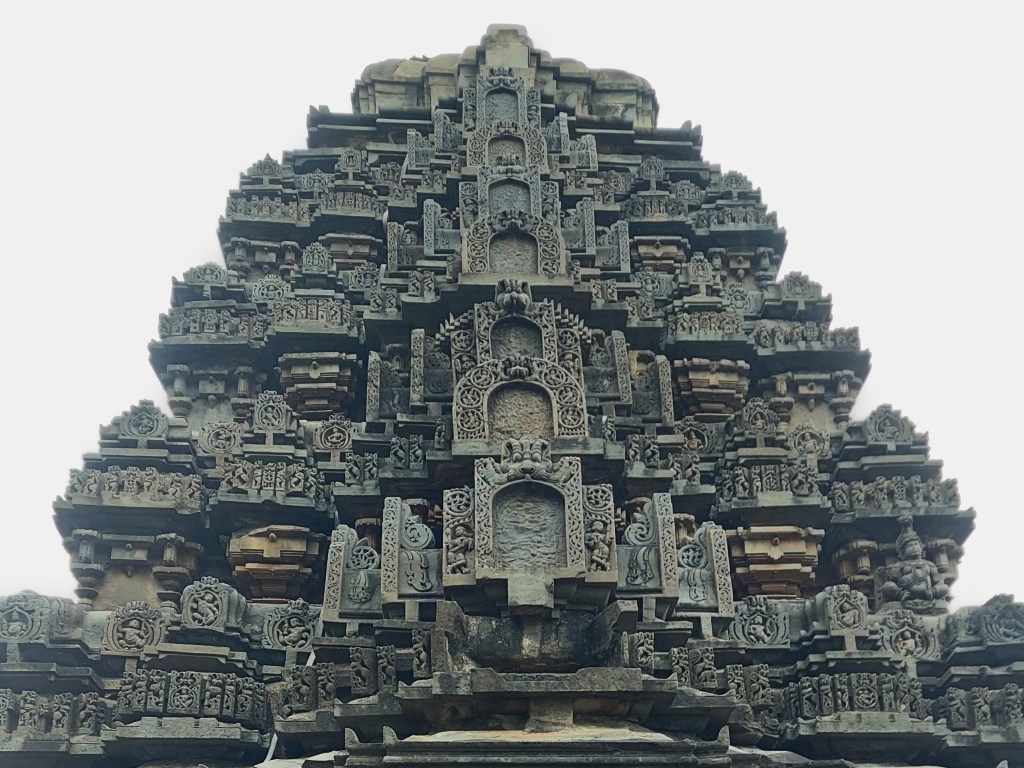
In a few reliefs, one can notice that the Yali and other animal figures seen in the Tarkeshwara temples, replaced by human figures in this temple reliefs.


Moved on to Sri Galagesvara temple on the banks of river Tungabhadra. A Kalyani/Western Chalukya temple, built in 11th century. About 3-feet tall Shivalinga in the garbhagriha. Taller than in other temples seen today. Located on ground level that is higher than the current surrounding grounds. A temple that was not easy to find. We kept asking for temple/mandir to locals, none understood the words. Then some local called out “devastana” and that helped point to the temple. On the road between us and the temple was a heap dry whole corns, being processed to make dried corn seeds for consumption. (Example of how roads are used in villages). ASI maintained temple, was the tallest among the ones seen today. The raised platform was significantly higher/taller than other temples seen so far. Also, on a much higher ground from the river. Was able to perform a pooja at the temple. Felt good.


A claim made by local was that there was another Linga, not accessible below the main Shivalinga, and as you perform abhisheka, the water/milk reaches the inaccessible Shivalinga too.
Few other reliefs, war scenes which are replica of ones seen in Laxmeshwar as per local people.
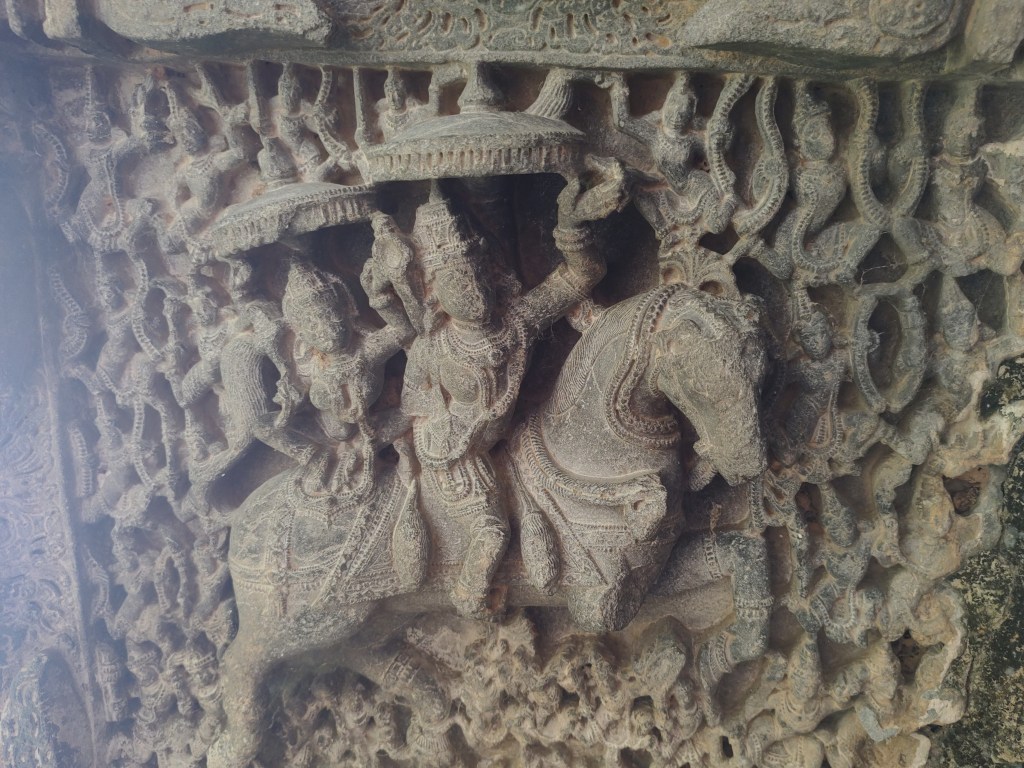

Next to the Sri Mukteshwara temple. Another temple on the banks of river Tungabhadra. Temple that was built in 12th Century. Missed taking picture of a couple of colourful hornbills. But that for some other time. Few images of the temple below.


Summary on Kalyani Chalukra temples visited today (yet to visit some of the more popular/better known temples of Badami, Itagi, Lakkundi and others): Kalyani Chalukya rulers seem to be shaivites. Smaller than the Hoysala/Chola temples, both in size of construction and area. Some places can see hemadpanti style of construction, may be hemadpanti style was derived from these temples). Stone Carvings/reliefs lesser in number, smaller and a few as good as the ones seen in Hoysala temples. Deepstambha common to all temples seen today.
The lower part of external wall had few reliefs/carvings. Could not make out a common pattern in the same. May be, the pattern was not evolved yet. Below are a few images of common reliefs across temples seen on the external wall.

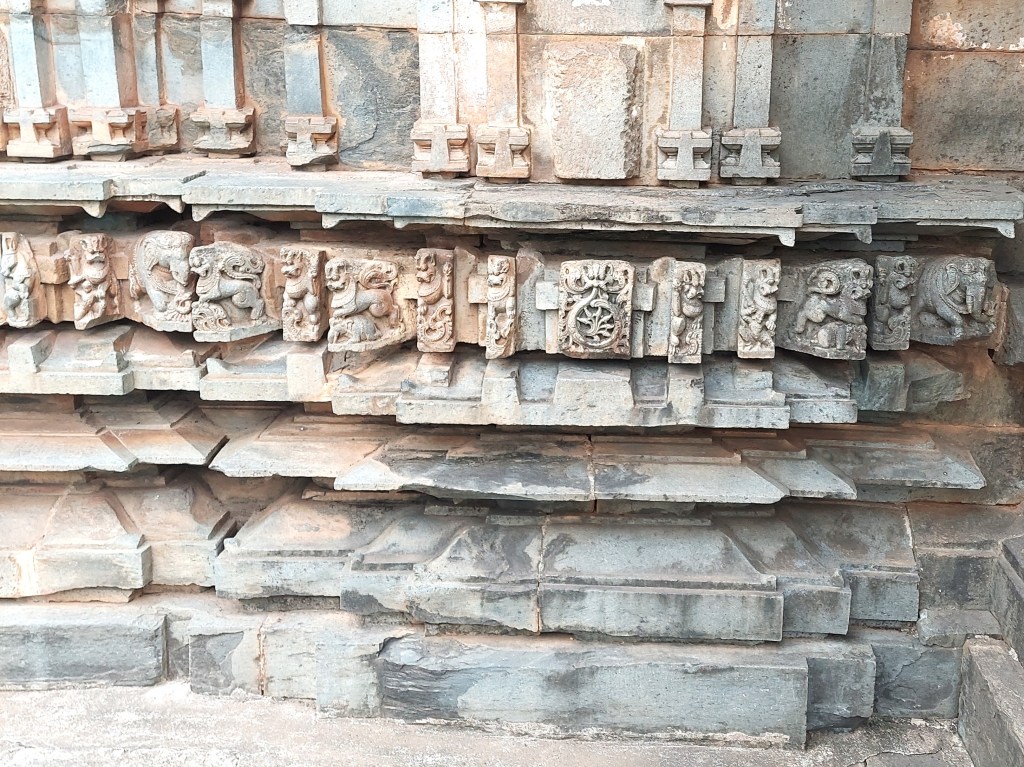
Lathe cut pillars, common to all temples as one enters the temple. Few had additional reliefs at the base or top of the pillars. Inner carvings were appearing better. Two temples built on the banks of river Tungabhadra were at significantly higher grounds. Entry to all temples was ticketless, unlike some other temples.
After visiting temples, started for Chitradurga. The last two temples were remote places, could not find good place for food and hence the lunch was extremely late on that day, in a restaurant on the highway to Chitradurga. Reached Chitradurga in the evening and retired for the day.
One of the most famous forts in Karnataka, especially due to an associated legend. Looks imposing on first sight with a large moat around the front gate. Seven circles before one reaches the innermost area. Two of them in the city area. One enters the current fort premises from the third gateway. Impressive tall fortification walls, usual serpentine pathways as one passes from one gate to the next. Construction started by Chalukyas, Hoysalas, the main fort was built by Nayakas, regional rulers under Vijayanagara empire.
Below image of the fort walls and moat.
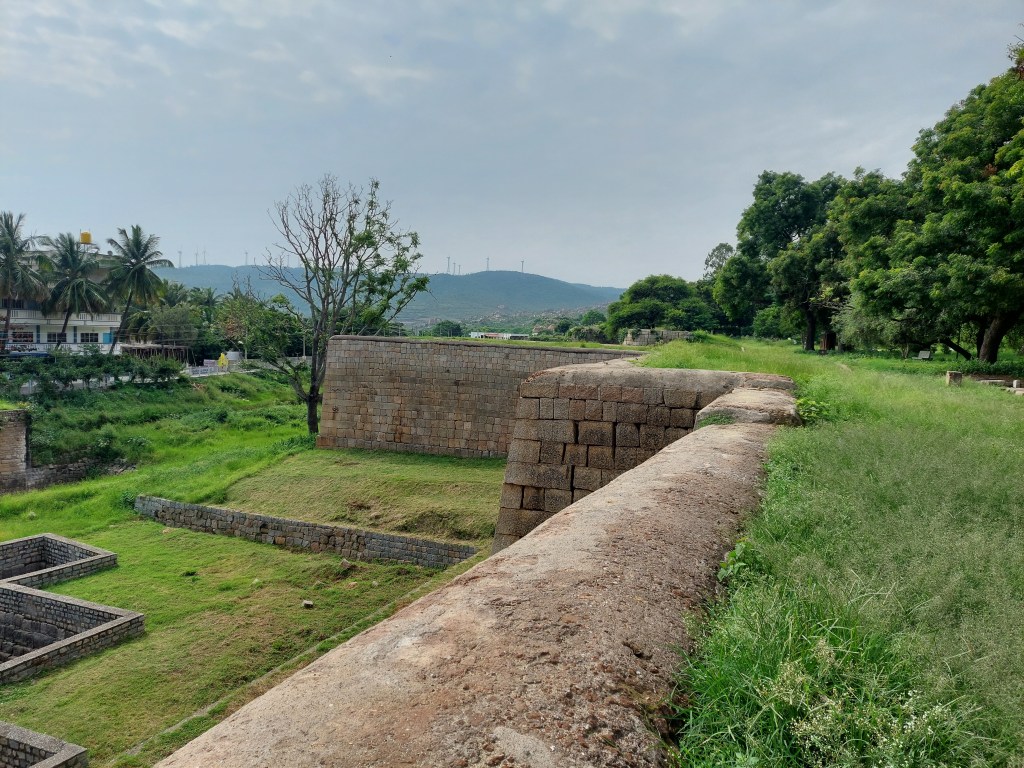

In the 18th Century, fell to Hydar Ali and then to British. Hyder Ali failed in his two of his attempts to capture the fort. Once foiled by heroic lady Obavva with her pestle. She killed multiple Hyder Ali soldiers trying to sneak from a crevice.
Multiple temples inside the fort walls, one of them linked to Mahabharata times as per the legend.
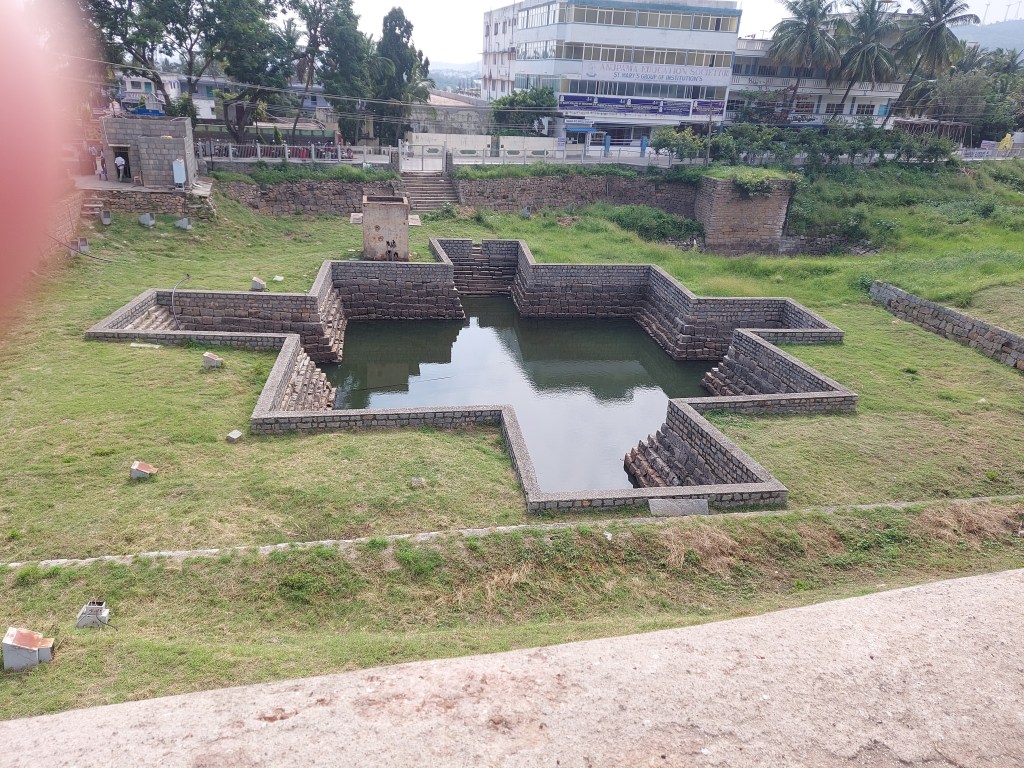
Below images of a huge gunpowder grinding unit, water storage area, two large oil tanks, granary, Admin block, few temples, a Matha, few two storied gateways, few of the multiple large watch towers and risky path to get to one of the highest watch towers in the fort. Did not risk going up to the watch tower.


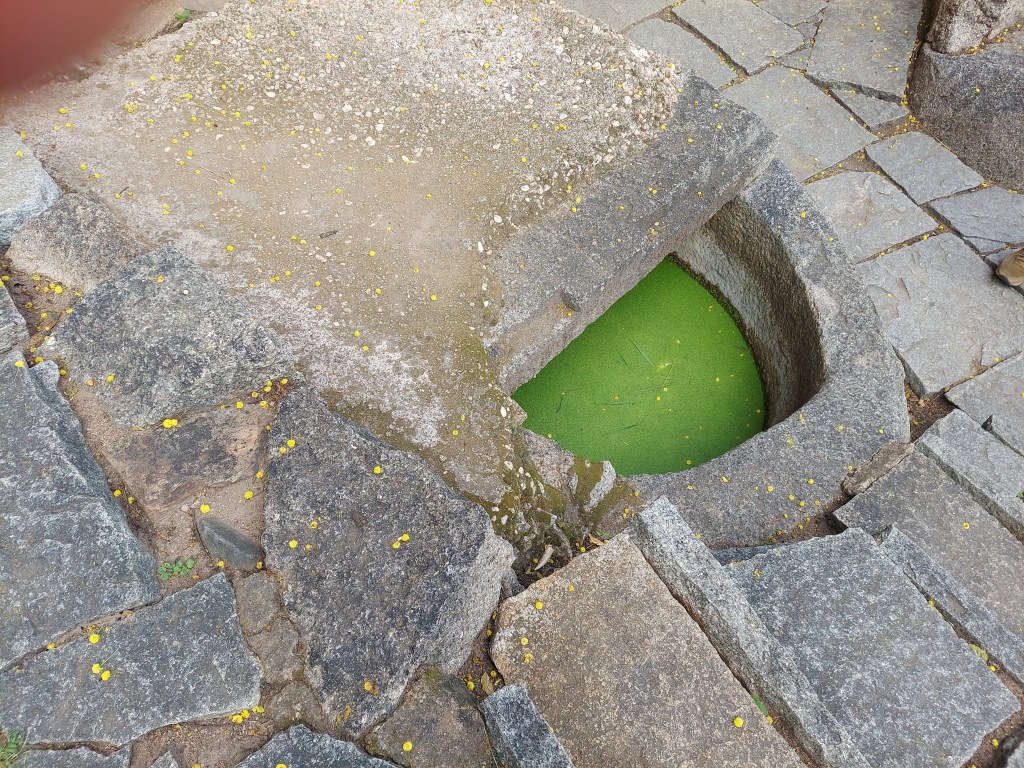


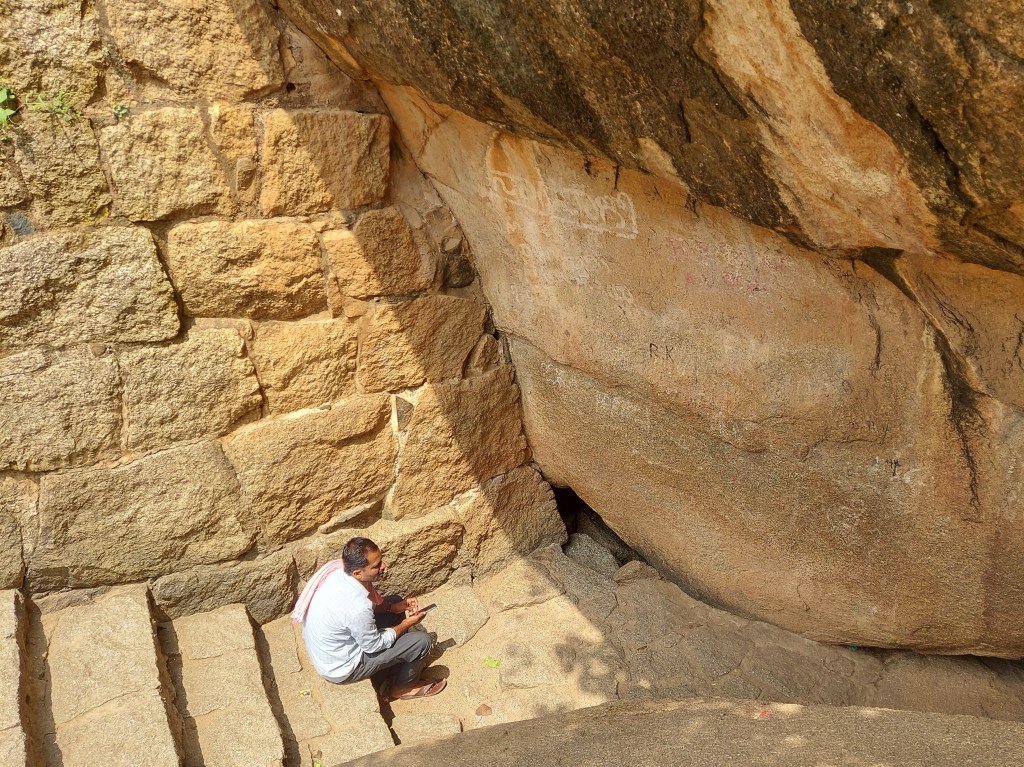
Below image of crevice from which Hydar Ali soldiers tried to sneak into the fort and met their end at the hands of brave Obavva.
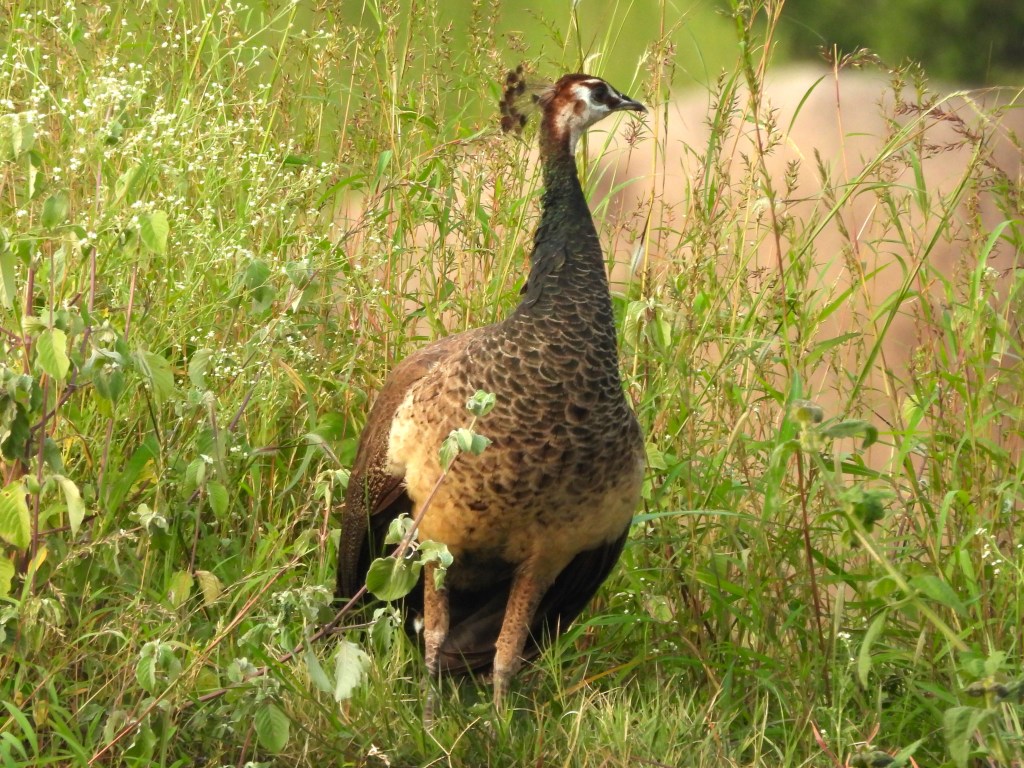
Captured a few pics of birds in the area. Below are few of the images. For more, visit bird pages.


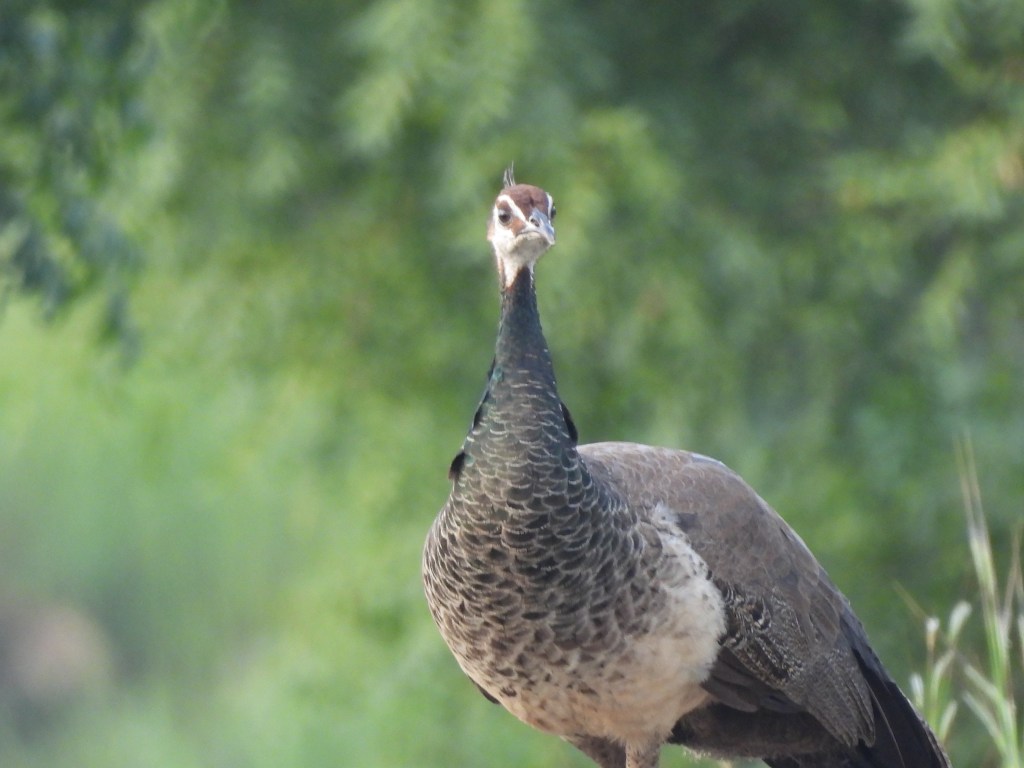
Continued to stay in Chitradurga in the night and drove back to Bangalore next day. We were planning to visit Hemavati on the way back but decided against it. Some other time.
While some of the roads, specially to the Galagnatha and Mukteshwara temples were not good, other roads were in good condition. A wonderful short trip to central Karnataka area.

 sunilmatange.in
Leave a comment